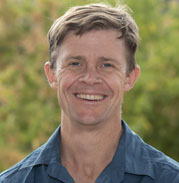
Speaker: Will Wieder, scientist and CESM Land Model working group co-chair, NSF-NCAR and University of Colorado
Understanding and predicting Earth’s response to climate change requires integrative tools that capture interactions among the atmosphere, biosphere, hydrosphere, and cryosphere. Earth system models, such as the Community Earth System Model (CESM), provide a powerful framework for representing these coupled processes across spatial and temporal scales.
This seminar will focus on cold-season dynamics, first by looking at projections of snow accumulation, melt, and runoff across cold-region ecosystems. Subsequently, we will dive deeper into how biophysical and biogeochemical process may respond to changes in the wintertime environment. Historically, deeper snowpacks provide thermal buffers to soils that sustain winter biogeochemical activity. Reduced snow cover leads to colder and more variable soil temperatures and increasing freeze–thaw frequency that may ultimately constrain microbial processes and biogeochemical cycling.
This work emphasizes the importance of accurately understanding snow–soil interactions and highlights key gaps in how declining snowpacks and shifting precipitation regimes may affect ecosystem processes.