Speaker: Ken Takahashi
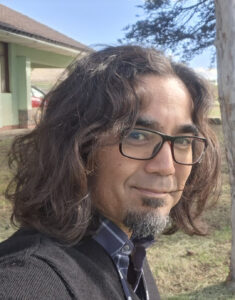 Ken Takahashi, Principal Scientific Researcher at the Geophysical Institute of Peru, will present preliminary results from idealized numerical experiments with the WRF regional atmospheric model and the ORCHIDEE land-surface model to investigate two-way interactions between Amazon vegetation and climate. WRF experiments show that replacing the forest with bare soil strongly reduces precipitation. Sensitivity experiments further show that this reduction is weakly related to changes in evapotranspiration and is instead mainly associated with increased surface albedo and reduced solar energy absorption. These results suggest that enhanced atmospheric stability and suppressed convection, rather than moisture recycling alone, may be a key mechanism linking deforestation to rainfall changes. ORCHIDEE experiments show that annual evapotranspiration is largely constrained by water and energy availability and is relatively insensitive to substantial differences in simulated vegetation state. They also show that longer dry seasons reduce forest biomass and annual evapotranspiration even at fixed annual precipitation. Because vegetation state may strongly affect surface albedo, these results suggest that radiative effects may provide an important pathway for forest–atmosphere coupling. Overall, the experiments suggest that surface albedo and precipitation seasonality may be as important as, or more important than, evapotranspiration changes in controlling Amazon forest–atmosphere interactions, with implications for projections of forest response to climate change and deforestation.
This seminar can also be viewed via our live stream.
Please note the different than usual date, time, and location.