On this page:
Partnerships
Wisconsin State Climatology Office Receives ARSCO Designation
The American Association of State Climatologists (AASC) has designated the Wisconsin State Climatology Office as the AASC Recognized State Climate Office, ARSCO, for the state of Wisconsin. The ARSCO title acknowledges that the office meets the AASC’s standards of providing quality climate services statewide.
Under the leadership of its director, Dr. Steve Vavrus, the Wisconsin State Climatology Office provides climate services that help Wisconsinites use weather and climate information most effectively. Their team includes eight staff members, with support from CCR student researchers Ziyi Xu, Noah Lang, Erin Duke, and Courtney Vanorio as student researchers.
Faculty and Staff Affiliates
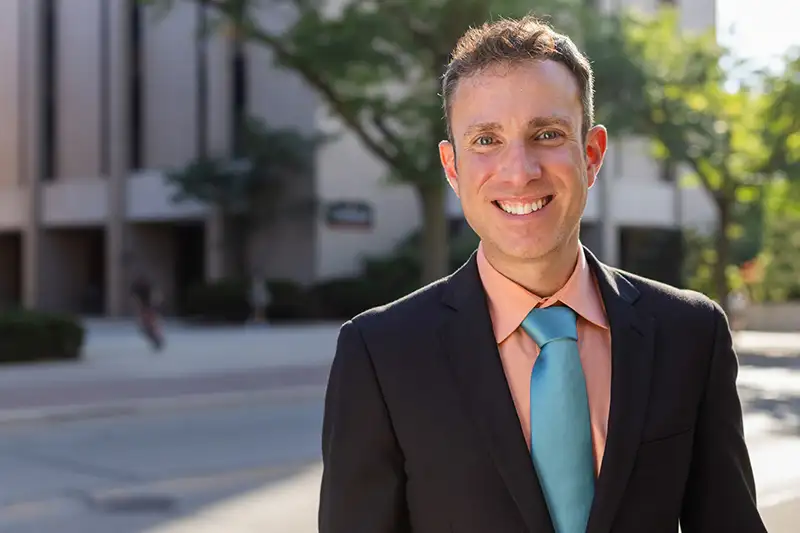 Professor Ángel Adames Corraliza (Department of Atmospheric and Oceanic Sciences (AOS)) was one of two UW–Madison professors awarded a MacArthur Fellowship, otherwise known as the “genius award,” from the John D. and Catherine T. MacArthur Foundation. He received an unrestricted $800,000 multi-year fellowship.
Adames Corraliza was named the Ned P. Smith Distinguished Chair of Climatology in the Department of Atmospheric and Oceanic Sciences. His research has led to advances in quantifying the role and impact of moisture in tropical weather and climate phenomena, bringing us closer to a comprehensive dynamical theory of the tropical atmosphere.
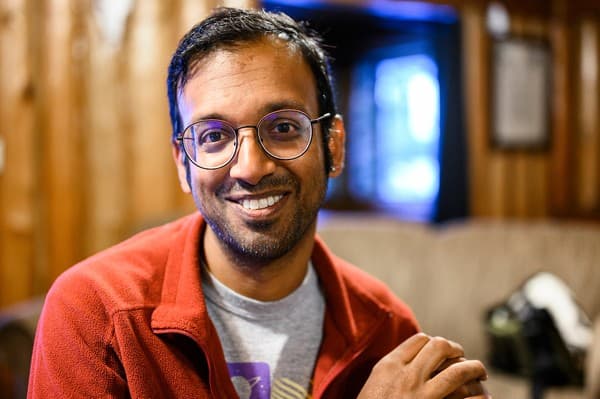 Ankur Desai, CCR assistant director and professor (AOS, Nelson Institute) was named the recipient of the 2025 AGU Sulzman Award for Scientific Excellence through Education and Mentoring. The award recognizes significant contributions as a role model and mentor for the next generation of biogeoscientists, especially those underrepresented in Earth sciences. The award likewise recognizes creative research skills, as well as excellence in science, excellence, and mentoring.
Desai also received the Vilas Distinguished Achievement Professorship in recognition of distinguished scholarship and standout efforts in teaching and service. His lab studies and has authored over 200 articles regarding ecosystems, weather, and climate. The work spans from Wisconsin to the globe and uses long-term observations in nature and advanced computer simulations.
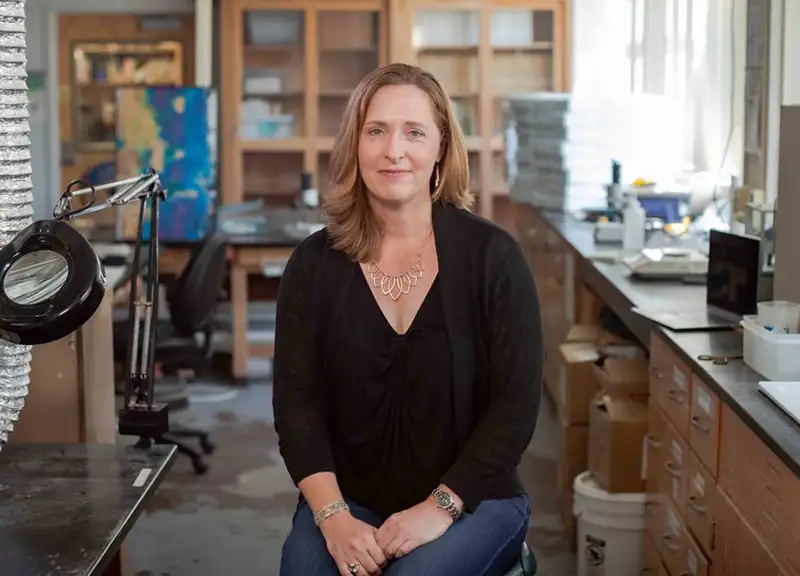 Professor Andrea Dutton (Department of Geoscience, Nelson Institute) received the Geological Society of America Public Service Award which recognizes contributions that have materially enhanced the public’s understanding of the Earth sciences or significantly served decision-makers in the application of scientific and technical information in public affairs and public policy related to the Earth Sciences.
Professor Dutton’s accomplishments are described by Professor Emerita Jean Bahr as: “Her public engagement activities in the last decade have ranged from testimony to the U.S. Congress, to TEDx presentations, media interviews, interactive presentations at schools and museums, op-eds published in national and international news outlets, and featured interviews on radio and on television series. Her dedication to public engagement goes well above and beyond her ‘day job’ as a researcher, teacher and mentor in a university setting, making her highly deserving of recognition as a recipient of the GSA Public Service Award.”
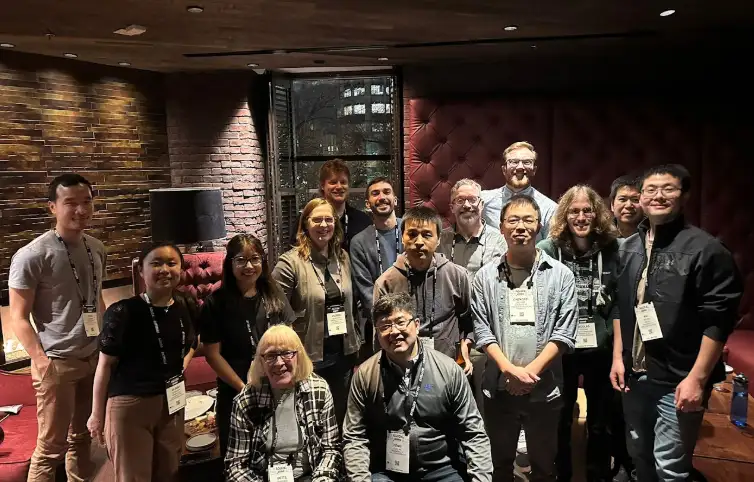 Feng He, CCR scientist, established the UW–Madison PaleoBadger Club as an informal, student-led group to facilitate conversations and build community among scientists interested in paleo research, including paleoclimatology, paleoecology, and climate modeling. The group meets once a month to create a space to build community among graduate students, postdocs, faculty, and research staff at UW–Madison.
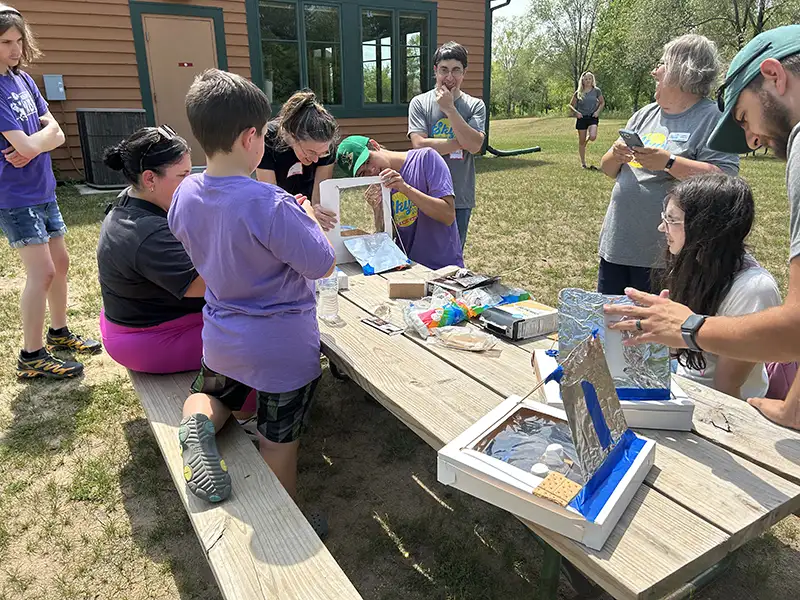 Michael Notaro, CCR director, was recognized for excellence in outreach with the Bassam Z. Shakhashiri Public Science Engagement Award. The award recognizes one UW–Madison faculty and one academic staff member who has shown excellence in engaging the public in their work in STEAM (Science, Technology, Engineering, Arts, and Mathematics).
The award is supported by the UW–Madison’s Office of the Vice Chancellor for Research, the Wisconsin Alumni Research Foundation, and the Morgridge Institute for Research. Dr. Notaro was recognized for his service as director of three STEM camps for autistic youth and Wisconsin partner/trainer for the NASA Global Learning and Observations to Benefit the Environment (GLOBE) youth citizen science and environmental education program.
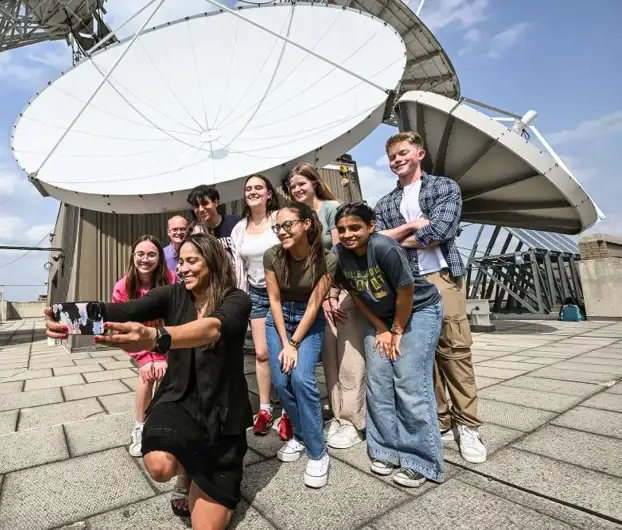 Professor Mayra Oyola-Merced (AOS) received a University of Wisconsin Award for Mentoring Undergraduates in Research, Scholarly, and Creative Activities. “I have never felt more supported and valued at this university than through the love and guidance I have felt from Dr. Oyola-Merced,” said student Paige Bartels. Oyola-Merced was also named the Ned P. Smith Distinguished Chair of Meteorology. She has the ambitious goal to “connect advanced science with real-world solutions – supporting safer, more resilient aviation while training the next generation of atmospheric scientists.”
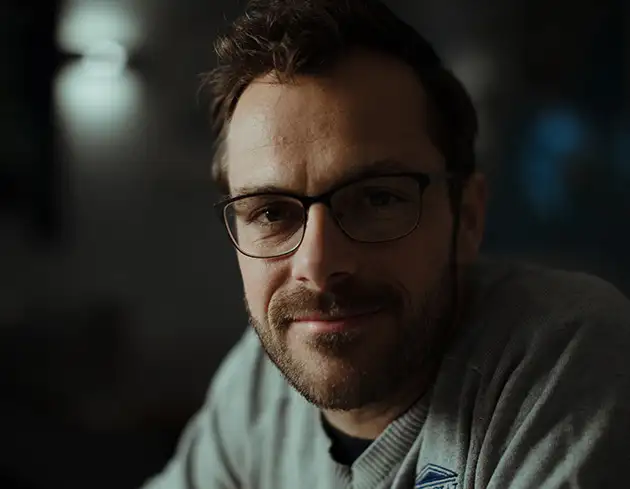 Professor Till Wagner (AOS, Nelson Institute) was awarded tenure. Professor Wagner’s research largely focuses on instability in the Arctic climate, the Atlantic Meridional Overturning Circulation, climate tipping points, the decay of ice sheets and icebergs, and sea ice-ecosystem interactions.
Wagner also received a National Science Foundation CAREER Award for his project, “Constraining Iceberg Size Distributions and their Climate Impacts in Models.” This distinguished grant supports early-career faculty who have the potential to serve as academic role models in research and education and to lead advances in the mission of their department or organization.
The CAREER award will build Wagner’s research program on how icebergs evolve and how their dynamics and impacts will change in an ever-warming world.
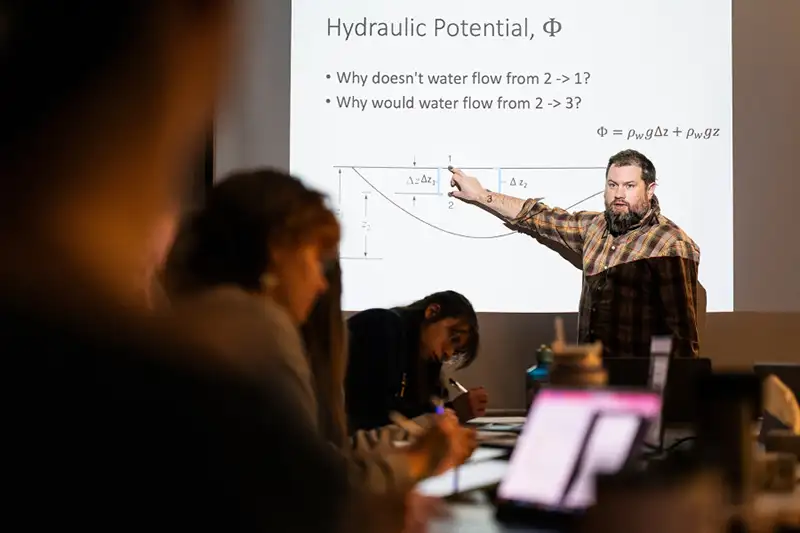 Professor Lucas Zoet (geoscience) received the UW–Madison Chancellor’s Inclusive Excellence Teaching Award, an honor given out since 1953 to recognize some of the university’s finest educators.
Professor Zoet emphasizes team-taught classes, integrating his own perspective as a glaciologist with the knowledge and experience of other researchers. His commitment to teaching and reaching the broadest possible audience in Wisconsin is illustrated by his development of a National Science Foundation-funded geoscience education program for the College of Menominee Nation.
Students
 Leo Balcer, a graduate research assistant from Professor Hannah Zanowski’s lab group, attended the American Meteorological Society (AMS) Conference on Polar Meteorology and Oceanography in Denver this past May, where he presented a poster on the topic of “Diagnosing the Internal Variability of Arctic Temperature and Sea Surface Salinity in Historical CMIP6.” His work aims to understand uncertainty in high-latitude climate modeling.
 Graduate research assistant Noah Lang has been diagnosing the specific causes of Wisconsin becoming warmer and wetter using self-organizing maps. His initial results indicate that the increases in temperature and precipitation for Wisconsin are primarily thermodynamic in nature. Lang has also competed as a member of UW’s Quizbowl team and helped moderate a high school-level tournament at the UW for local schools.

Two CCR research assistants, Taydra Low and Rudra Thaker (AOS), helped organize the 19th annual Graduate Climate Conference, held at the Marine Biological Laboratory in Cape Cod, Massachusetts, in November 2025.
Attended by approximately 120 graduate students from United States and international institutions, the conference is a unique opportunity for graduate students to share new techniques and avenues of research, discuss recent findings and their implications, and consider major questions in the future of climate research. Low and Thaker also presented posters of their research, and Low presented a lightning talk in a public session.
Graduate research assistant Evan Meeker traveled to Bologna, Italy in November to attend the Open Workshop on Understanding and Predicting Annual to Multi-Decadal Climate Variations. There, he gave a presentation based on recently published work. He was also invited to a Decadal Climate Prediction Project (DCPP) panel meeting to present preliminary model experiment results.
He ran an experiment with the Community Earth System Model to test the global response to anomalous surface heat flux forcing in the North Pacific on decadal timescales. The results of this experiment are helping DCPP to determine protocols for multi-model experiments for phase 7 of the Coupled Model Intercomparison Project.
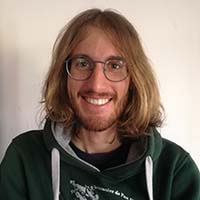 Nicolas Sartore, an AOS graduate student and CCR research assistant, received the Ettenheim Scholarship Award for the third consecutive year. Under the advisement of Professor Till Wagner, Nicolas’s research focuses on investigating different couplings between ice shelves and the ocean using remote sensing and idealized physics-based models, including an exploration of wave erosion, frontal bending, and calving at the Ross Ice Shelf in Antarctica.
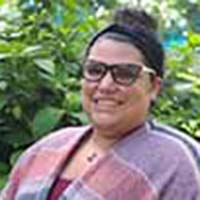 Advanced Opportunity Fellow Marissa Tripus gave a talk at an Astronomy On Tap event, which is part of the Badgers On Tap series meant to make academic subjects accessible to a broad public audience. Her presentation emphasized the importance of considering oceans on other planets when evaluating whether a planet could support and host life. Her presentation brings the emerging field of planetary oceanography to a wide public audience.
 Clark Zimmerman, an AOS PhD student and CCR research assistant, received the Francis P. Bretherton Scholarship Award. Zimmerman and Professor Till Wagner took part in the Greenland Ice Sheet Ocean Interactions Workshop in Nuuk, Greenland. They met with Greenlandic stakeholders, visited research sites, and sailed far into the ice of Nuup Kangerlua fjord, collecting conductivity, temperature, and depth measurements and getting a glimpse of the glacier’s imposing calving front.
Zimmerman also traveled to Busan, South Korea to attend the BACO-2025 Conference in July 2025. At the conference, she presented her research on the topic of “The model dependance of the dynamical stability of the Atlantic Meridional Overturning Circulation.” She was also the lead author, along with Professor Wagner, of an article on the topic of “Slowed Response of Atlantic Meridional Overturning Circulation (AMOC) Not a Robust Signal of Collapse,” in which they demonstrate that early warning signals can reveal false alarms of collapse of the AMOC.
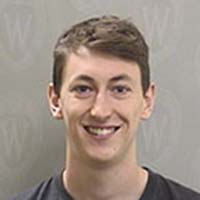 Graduate research assistant Jack Zweifel from Professor Vimont’s lab group spent the summer as a research intern at the Oak Ridge National Laboratory in Tennessee where he worked in their division of Computational Hydrology and Atmospheric Science, using machine learning to investigate radiative models. Through this research, they were able to reproduce 95 percent of sulfate-related direct and indirect effects with feed-forward neural network. This work relates to anthropogenic sources of carbon dioxide, looking at radiative forcing.
CCR graduate students Clark Zimmerman and Rudradutt Thaker have been coaching Science Olympiad, a top national STEM competition.